

Glatt River diverted into renaturalised riverbed
Zurich Airport Ltd. is currently implementing the first stage of the Glatt revitalisation project in the Eichhof area of Rümlang. The Glatt was diverted into its new, ecologically designed riverbed today. The project outside the airport grounds serves as an ecological compensation measure for construction projects at Zurich Airport and creates new habitats.
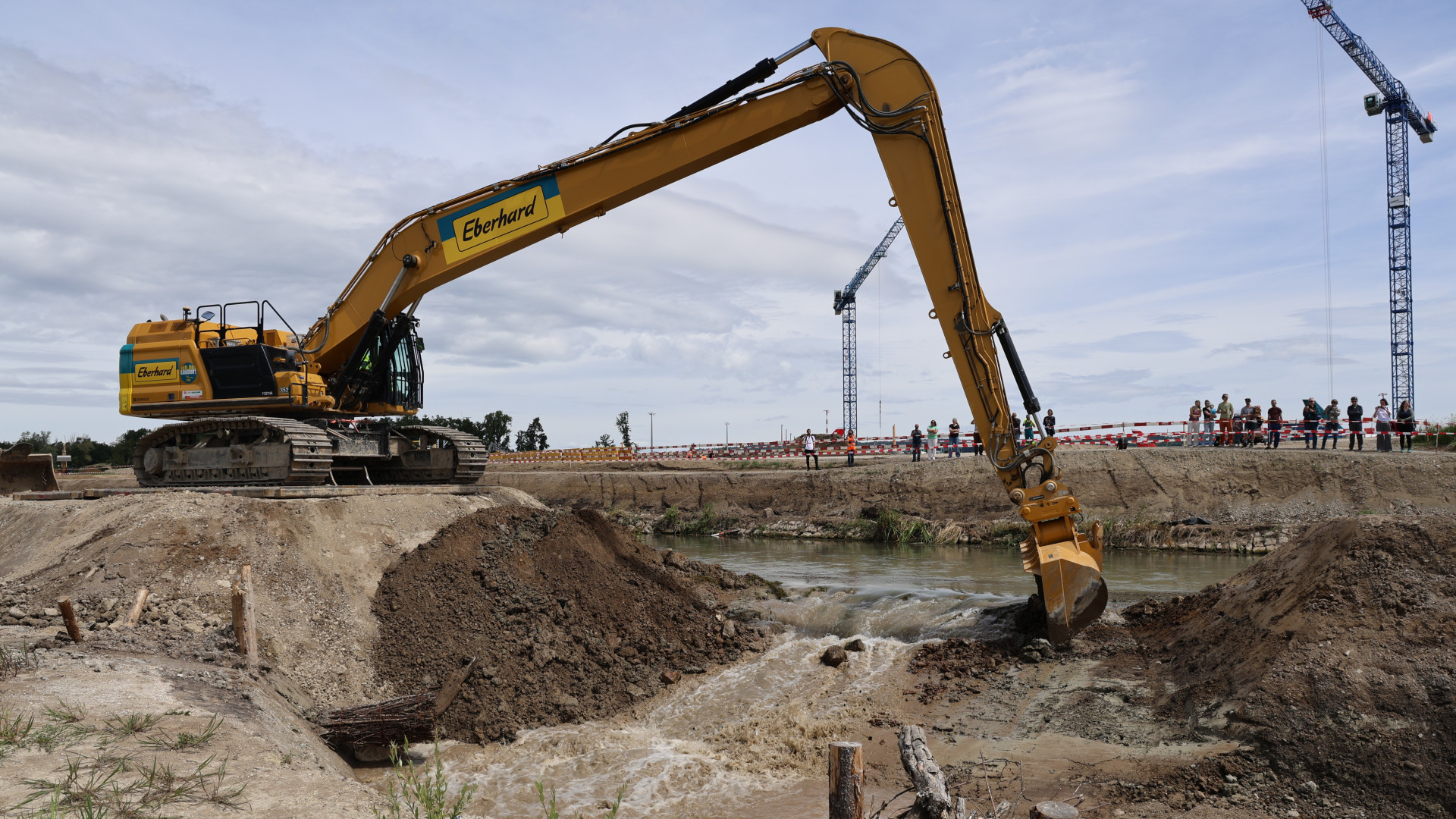
A 700-metre stretch of the Glatt River was guided into its new riverbed at midday on Thursday in the presence of cantonal and municipal representatives. In a symbolic act, guests of honour carried water from the old riverbed to the Glatt’s new course to inaugurate the river’s new course. Excavators then opened up the dams at the connection points and the Glatt River flowed into its new bed.
Ecological compensation measure near the airport
Zurich Airport Ltd. is investing around CHF 50 million in the revitalisation of the Glatt River. The project serves as compensation measure for construction projects at Zurich Airport that impact conservation-worthy habitats. Because the project is located in close proximity to the airport grounds, the environmental impacts of the airport’s development can be offset directly in the region.

Revitalisation project of this magnitude is not a commonplace occurrence for us as an airport operator. But it shows that we take responsibility for the environment while simultaneously facilitating airport development.

Near-natural bodies of water with new habitats
The Glatt River was straightened and channelled as part of river channel modifications undertaken around 150 years ago. The revitalisation project along the stretch between Opfikon and Rümlang is broken down into three stages. Over a length of 3.3 kilometres, it will recreate a diverse body of water with meanders, shallow water zones and natural shore structures. River variability, with different widths and depths, promotes flow diversity and creates valuable habitats for plants and animals. The first stage of construction, which is currently in progress in the Eichhof area, has a length of 1.2 kilometres.
Shallow riparian zones offer protected areas for young fish to develop while steep cut banks create a habitat for wild bees and kingfishers. Around 1.8 hectares of new reed meadows – particularly species-rich and ecologically valuable wetlands – are also being created. A total of 345 trees and around 11,600 shrubs will be planted in the Eichhof section.
The new course of the river was largely shaped through the use of existing materials. The natural combination of clay, sand, peat and occasionally gravel will allow the body of water to develop in a near-natural, location-appropriate manner.
Project to be put on hold
This first stage of construction will be completed in spring 2027. Until then, a further 200 metres of river will have been restored, and both the landscaping and pathways will have been completed. As previously announced, once the first stage of construction has been completed, the project will be put on hold until politicians have established the general conditions for dealing with PFAS-contaminated soil.